
Knee Osteoarthritis: Symptoms, Causes, Diagnosis, and Treatment Options
What Is Knee Osteoarthritis?
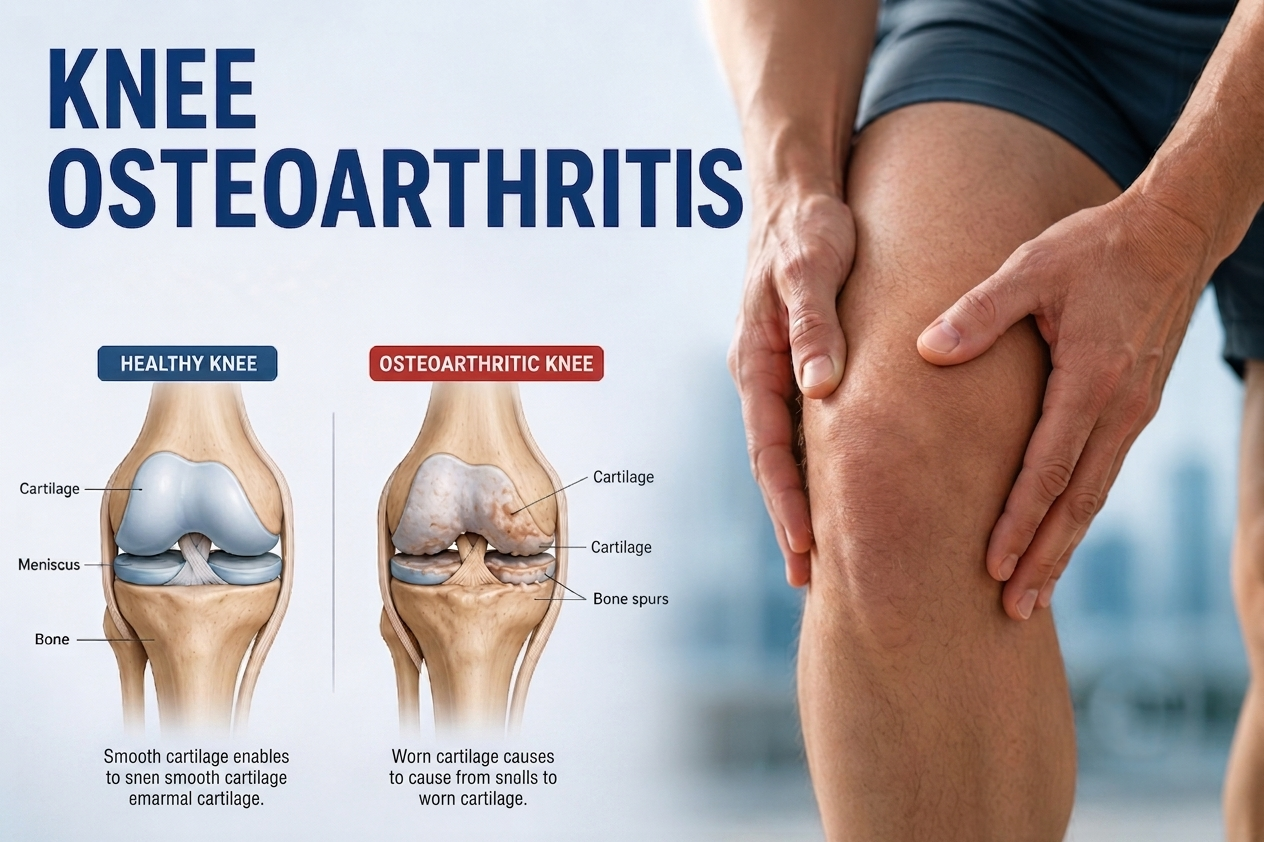
Knee osteoarthritis (OA) is the most common form of arthritis affecting the knee joint. It occurs when the protective cartilage that cushions the ends of the bones gradually wears away over time. As the cartilage breaks down, the bones may rub against each other, leading to pain, stiffness, swelling, and reduced mobility.
Knee osteoarthritis is considered a degenerative joint disease and commonly affects older adults, although younger individuals can also develop it following injury or repetitive stress on the knee. The condition may worsen gradually over time if left untreated.
Symptoms of Knee Osteoarthritis
The symptoms of knee osteoarthritis usually develop slowly and progressively worsen over time. Common symptoms include:
- Knee pain during or after movement
- Joint stiffness, especially in the morning or after inactivity
- Swelling around the knee joint
- Tenderness when touching the knee
- Grinding or cracking sensations during movement
- Reduced range of motion or flexibility
- Weakness or instability in the knee
- Difficulty walking, climbing stairs, or standing for long periods
In advanced stages, some patients may also develop bone spurs, which are extra bony growths around the joint.
Causes and Risk Factors
Knee osteoarthritis develops due to a combination of mechanical stress and biological changes within the joint. Several factors increase the risk of developing the condition.
Age
The risk of osteoarthritis increases with aging because cartilage naturally becomes less resilient over time.
Obesity
Excess body weight places additional stress on weight-bearing joints such as the knees. Obesity is one of the strongest modifiable risk factors for knee OA.
Previous Knee Injuries
Sports injuries, ligament tears, meniscus injuries, or fractures can increase the likelihood of developing osteoarthritis later in life.
Repetitive Stress
Jobs or activities involving repetitive kneeling, squatting, heavy lifting, or high-impact sports may accelerate joint wear.
Genetics and Joint Alignment
Some individuals inherit a tendency toward osteoarthritis or may have abnormal joint alignment that increases pressure on the knee joint.
Diagnosis of Knee Osteoarthritis
Diagnosis begins with a detailed medical history and physical examination. Healthcare providers evaluate symptoms such as pain, stiffness, swelling, and joint function.
Imaging Studies
X-rays
X-rays are commonly used to identify:
- Joint space narrowing
- Bone spurs (osteophytes)
- Changes in bone structure
MRI
Magnetic resonance imaging (MRI) may be ordered in more complex cases to evaluate cartilage, ligaments, and surrounding soft tissues.
Conservative (Non-Surgical) Treatment
Exercise and Physiotherapy
Exercise therapy and physiotherapy are considered among the most effective conservative treatments for knee osteoarthritis. Regular physical activity helps reduce pain, improve joint mobility, decrease stiffness, and strengthen the muscles that support the knee joint. Low-impact exercises such as walking, cycling, swimming, stretching, and lower-extremity strengthening exercises are commonly recommended to improve overall knee function and daily mobility.
One evidence-based program widely used in Canada is the GLA:D® Canada program (Good Life with osteoArthritis in Denmark). This program combines patient education with supervised neuromuscular and strengthening exercises specifically designed for individuals with knee and hip osteoarthritis. GLA:D® Canada focuses on improving muscle strength, balance, posture, and functional movement patterns. Research has shown that participants often experience reduced pain, improved physical function, better quality of life, and reduced dependence on pain medications. More information about the program can be found at https://gladcanada.ca/ and https://gladcanada.ca/glad-exercises/.
Weight Management
Excess body weight increases pressure on the knee joints. Weight management can significantly reduce stress on the knees and help improve pain and physical function.
Even modest weight loss may provide noticeable symptom relief for many patients with knee osteoarthritis.
Medications
Several medications may help reduce pain and inflammation associated with knee osteoarthritis.
Common options include:
- Acetaminophen (Tylenol)
- Nonsteroidal anti-inflammatory drugs (NSAIDs) such as ibuprofen or naproxen
- Topical anti-inflammatory creams or gels
These medications should be used carefully and under healthcare supervision, especially for long-term use.
Injection Therapy
Some patients may benefit from injection therapy when symptoms become more severe or persistent.
Corticosteroid injections may help:
- Reduce inflammation
- Provide temporary pain relief
- Improve short-term knee function
The effectiveness and duration of relief can vary between individuals.
Lifestyle Modification
Lifestyle modifications are also important in managing knee osteoarthritis. Patients are often advised to:
- Avoid prolonged kneeling or squatting
- Modify high-impact activities
- Maintain regular physical activity
- Use supportive footwear
- Practice proper body mechanics during daily activities
These changes may help reduce stress on the knee joint and slow symptom progression.
Knee Replacement Surgery
For severe osteoarthritis that does not respond to conservative treatment, total knee replacement surgery may be recommended. During this procedure, damaged joint surfaces are replaced with artificial components to restore function and relieve pain.
Conclusion
Knee osteoarthritis is a common degenerative joint condition that can significantly affect mobility and quality of life. Early diagnosis and proper management are important for controlling symptoms and maintaining daily function.
Treatment may include exercise, physiotherapy, weight management, medications, injections, lifestyle modification, and in severe cases, surgery. With appropriate care, many individuals with knee osteoarthritis can continue to live active and productive lives.
References
BMJ Best Practice. (2025). Osteoarthritis assessment and management. Retrieved June 11, 2026, from https://bestpractice.bmj.com/topics/en-gb/192
GLA:D Canada. (2026). GLA:D exercises. Retrieved June 11, 2026, from https://gladcanada.ca/glad-exercises/
Mayo Clinic. (2025). Osteoarthritis: Symptoms and causes. Retrieved June 11, 2026, from https://www.mayoclinic.org/diseases-conditions/osteoarthritis/symptoms-causes/syc-20351925
Mayo Clinic. (2025). Osteoarthritis: Diagnosis and treatment. Retrieved June 11, 2026, from https://www.mayoclinic.org/diseases-conditions/osteoarthritis/diagnosis-treatment/drc-20351930
Canadian Orthopaedic Foundation. (2026). GLA:D™ Canada osteoarthritis exercise program. Retrieved June 11, 2026, from https://movepainfree.org/glad-osteoarthritis-exercise-program/