
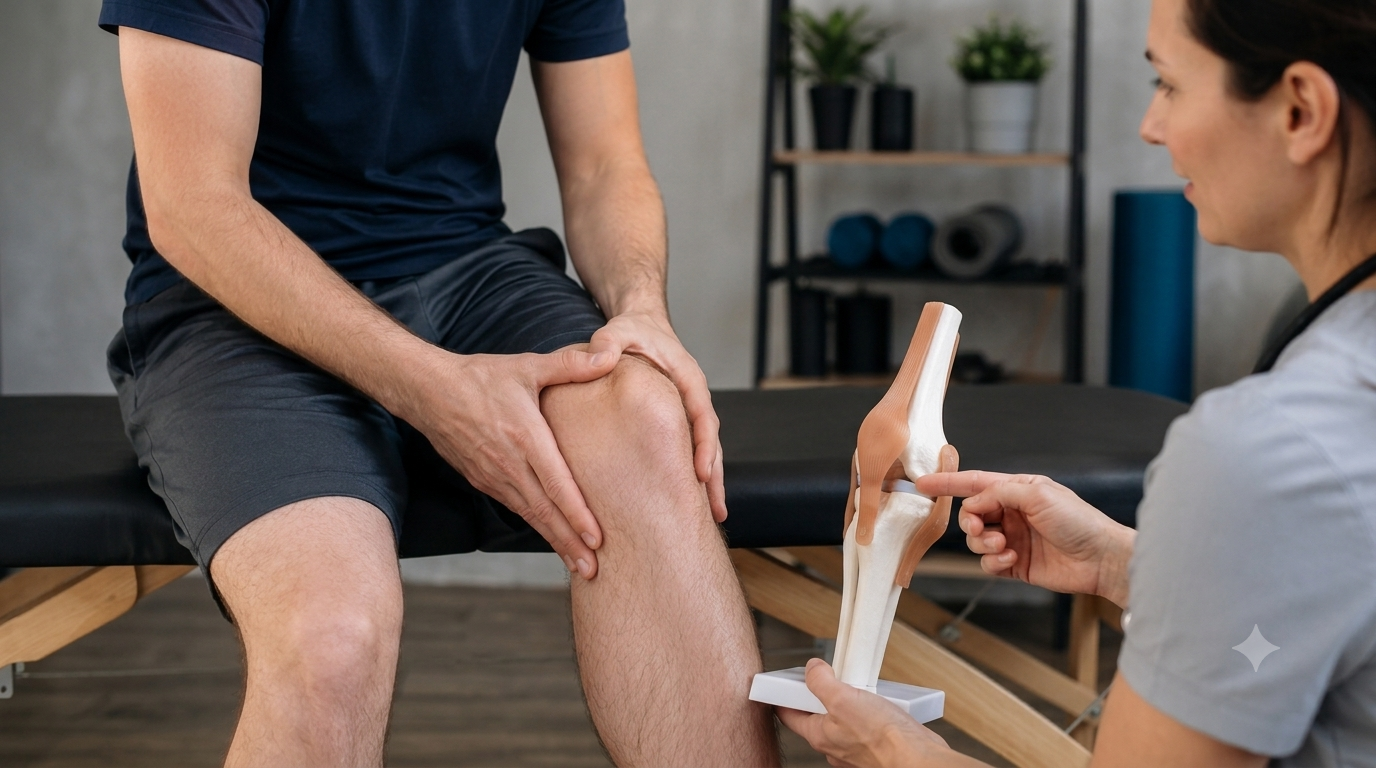
An anterior cruciate ligament (ACL) tear is one of the most common ligament injuries affecting the knee. It can occur during sports, slips and falls, motor vehicle accidents, or any sudden twisting movement of the knee. An ACL injury can lead to pain, swelling, instability, and difficulty performing everyday activities.
Understanding the role of the ACL and the available treatment options can help individuals make informed decisions about their recovery.
What Is the ACL?
The anterior cruciate ligament (ACL) is one of the four major ligaments that stabilize the knee joint. It connects the femur (thigh bone) to the tibia (shin bone) inside the knee joint.
Anatomy
- Origin: Posteromedial aspect of the lateral femoral condyle
- Insertion: Anterior intercondylar area of the tibia
Main Functions
The ACL helps:
- Prevent the tibia from moving too far forward relative to the femur
- Control rotational movements of the knee
- Maintain knee stability during walking, running, changing direction, and other daily activities
Common Signs and Symptoms
An ACL tear often causes:
- A popping sensation at the time of injury
- Immediate knee pain
- Swelling that develops within a few hours
- Difficulty bearing weight
- A feeling that the knee is unstable or “giving way”
- Reduced range of motion
Diagnosis
Diagnosis begins with a detailed medical history and physical examination. Your healthcare provider may perform specific ligament stability tests, such as the Lachman Test and Anterior Drawer Test, to assess the ACL.
If an ACL tear is suspected, an MRI is the preferred imaging study because it can confirm the injury and identify other associated damage, such as meniscal or cartilage injuries.
Treatment
Treatment depends on several factors, including the severity of the injury, knee stability, activity level, overall health, and personal goals.
Conservative Management
Many individuals can be managed without surgery. Conservative treatment may include:
- Activity modification
- Pain and swelling management
- Physical rehabilitation
- Strengthening and flexibility exercises
- Balance and functional training
A structured rehabilitation program aims to restore knee function, improve stability, and help patients safely return to their normal daily activities.
Medical Intervention
For individuals with significant knee instability, complete ACL tears, or higher functional demands, an orthopaedic specialist may recommend ACL reconstruction surgery. Surgery is typically followed by a comprehensive rehabilitation program to restore strength, mobility, and function.
Can ACL Tears Be Prevented?
Although not every ACL injury can be prevented, maintaining good lower-limb strength, flexibility, balance, and overall physical conditioning may help reduce the risk of knee injuries during work, exercise, and daily activities.
In Summary
The anterior cruciate ligament (ACL) is a key stabilizing ligament of the knee. An ACL tear commonly causes pain, swelling, and knee instability, affecting both daily activities and physical function. Diagnosis is based on a thorough medical history, physical examination, and, when appropriate, MRI to confirm the injury.
Treatment may involve conservative rehabilitation or medical intervention, including ACL reconstruction surgery, depending on the severity of the injury and the individual’s goals. Early assessment and a structured rehabilitation program are essential for optimizing recovery and restoring knee function.
References
- American Academy of Orthopaedic Surgeons. (n.d.). Anterior cruciate ligament (ACL) injuries. OrthoInfo. https://orthoinfo.aaos.org/en/diseases–conditions/anterior-cruciate-ligament-acl-injuries/
- BMJ Best Practice. (n.d.). Anterior cruciate ligament tear. BMJ Publishing Group. https://bestpractice.bmj.com/topics/en-gb/3000168
- Mayo Clinic Staff. (2024). ACL injury: Symptoms and causes. Mayo Clinic. https://www.mayoclinic.org/diseases-conditions/acl-injury/symptoms-causes/syc-20350738
- van Melick, N., van Cingel, R. E. H., Brooijmans, F., Neeter, C., van Tienen, T., Hullegie, W., & Nijhuis-van der Sanden, M. W. G. (2016). Evidence-based clinical practice update: Practice guidelines for anterior cruciate ligament rehabilitation based on a systematic review and multidisciplinary consensus. British Journal of Sports Medicine, 50(24), 1506–1515. https://doi.org/10.1136/bjsports-2015-095898
⚠️ Disclaimer: This article is for educational purposes only and is not intended to replace professional medical assessment, diagnosis, or treatment by a qualified healthcare provider.