
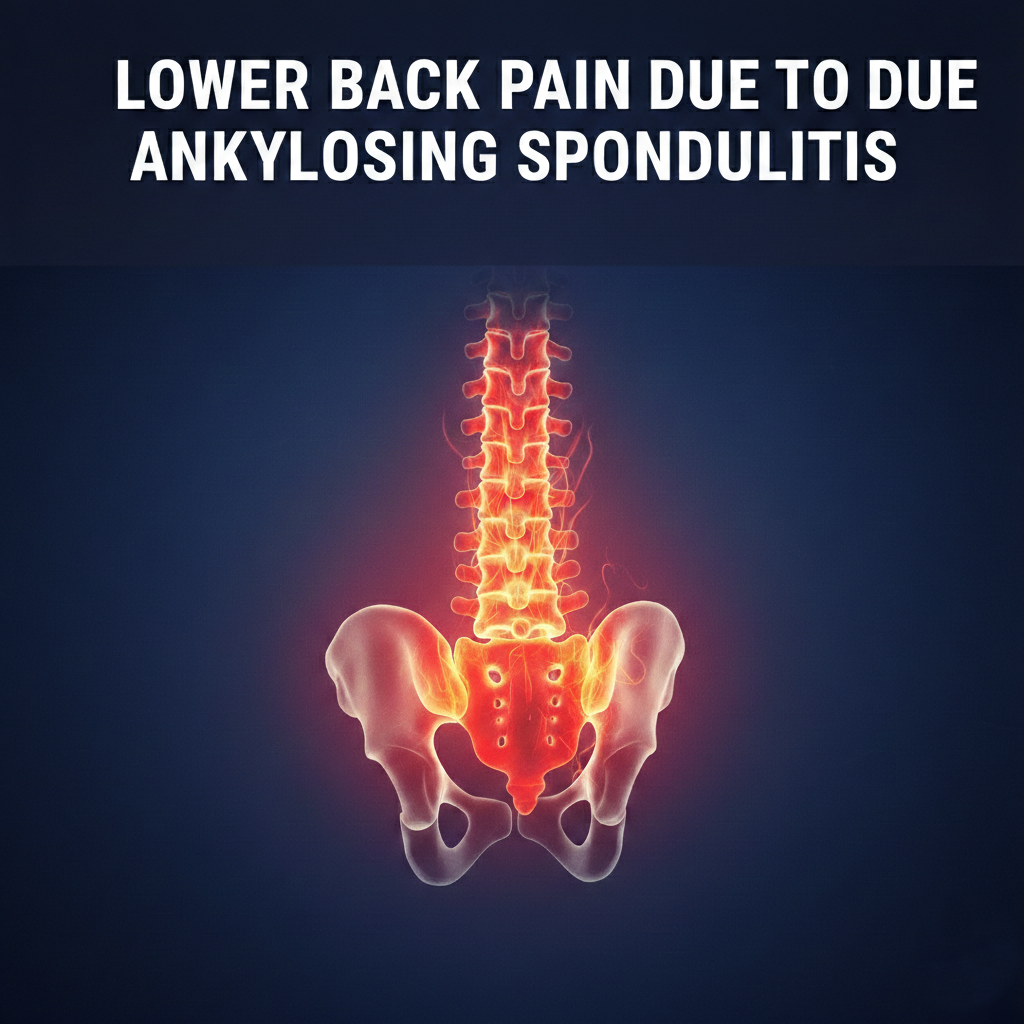
Lower Back Pain Due to Ankylosing Spondylitis
Lower back pain is often assumed to be mechanical, but not all back pain comes from muscles or joints. One important non-mechanical cause of low back pain is ankylosing spondylitis (AS), also known as axial spondyloarthritis.
AS is a chronic inflammatory condition that mainly affects the spine and the joints connecting the spine to the pelvis (sacroiliac joints). Over time, ongoing inflammation may lead to stiffness, reduced spinal mobility, and in some cases fusion of the vertebrae.
What Is Ankylosing Spondylitis?
Ankylosing spondylitis usually begins in early adulthood and develops gradually. Because symptoms often resemble common back pain, diagnosis may be delayed.
Although the exact cause is unknown, AS is believed to result from a combination of genetic and environmental factors. The HLA-B27 gene is strongly associated with the condition, but having the gene alone does not mean a person will develop AS.
Common Symptoms and Features
Inflammatory back pain caused by AS has several characteristic features:
- Gradual onset of lower back and hip pain
- Morning stiffness or stiffness after rest
- Pain that worsens with inactivity and improves with movement
- Neck stiffness and fatigue
- Symptoms that come and go, with periods of flare-ups
Because AS is a systemic inflammatory condition, symptoms may also involve other parts of the body, including:
- Eye inflammation (uveitis), causing eye pain or vision changes
- Pain or stiffness in other joints such as the shoulders, hips, knees, ribs, or feet
- Inflammation where tendons and ligaments attach to bone (commonly the spine or heel)
- Difficulty taking deep breaths if rib joints are affected
- Gastrointestinal symptoms such as abdominal pain
Areas Commonly Affected
Ankylosing spondylitis most often involves:
- Sacroiliac joints
- Lower back vertebrae
- Tendon and ligament attachment sites
- Rib and breastbone joints
- Hip and shoulder joints
How AS Progresses
AS is a progressive condition, but progression varies from person to person. Repeated cycles of inflammation and healing can lead to new bone formation. In severe cases, this may result in partial or complete fusion of the spine, leading to reduced mobility and posture changes.
Not everyone with AS develops spinal fusion, especially when the condition is identified and managed early.
Diagnosis
Diagnosis typically includes a combination of:
- Clinical assessment
- Imaging studies such as X-ray or MRI
- Blood tests, including HLA-B27 and other inflammatory markers
MRI is particularly useful in detecting early inflammatory changes before they appear on X-rays.
Treatment and Management
There is no cure for ankylosing spondylitis, but treatment can help:
- Reduce inflammation and pain
- Improve mobility and function
- Slow disease progression
Management is typically led by medical specialists, most commonly rheumatologists, and may involve pharmacological intervention, followed by physiotherapy exercises and long-term monitoring.
Key Takeaway:
Not all low back pain is mechanical. Persistent stiffness, pain that improves with movement, or symptoms beyond the spine may suggest an inflammatory cause such as ankylosing spondylitis.
Reference
Mayo Clinic. (2025). Ankylosing spondylitis – Symptoms & Causes. Retrieved from https://www.mayoclinic.org/diseases-conditions/ankylosing-spondylitis/symptoms-causes/syc-20354808
Spondylitis Plus Foundation. (2025). Blood work in ankylosing spondylitis. Retrieved from
https://spondylitis.org/spondylitis-plus/blood-work-in-ankylosing-spondylitis/
PubMed / scientific sources (management & treatment):
Agrawal, P., et al. (2024). Diagnosis and treatment of ankylosing spondylitis. PubMed. https://pubmed.ncbi.nlm.nih.gov/38371049/
Sari, İ. (2015). Treatment of ankylosing spondylitis: Overview of pharmacologic management. PubMed. https://pubmed.ncbi.nlm.nih.gov/26084136/
Gravaldi, L. P. (2022). Effectiveness of physiotherapy in patients with ankylosing spondylitis. PubMed. https://pubmed.ncbi.nlm.nih.gov/35052296/
Disclaimer
This content is intended for educational purposes only and does not replace professional medical advice, diagnosis, or treatment. Please always consult a qualified healthcare professional for individual assessment, diagnosis, or care.